The Commercial Buyer’s Due-Diligence Timeline
I recently taught a 101 class to realtors and brokers on Commercial Due Diligence, specifically as pertains to the Property Condition Assessment (PCA) process. The most prevalent questions were around timing -when is it best to schedule what.
As you should know, buying a commercial property involves much more than deciding whether the building looks sound.
A property may be operating normally today while carrying significant near-term expenses for roofing, HVAC equipment, pavement, electrical systems, accessibility improvements, drainage, or other building components. Other concerns may not be visible at all without document research, environmental review, or specialized evaluation.
That is why commercial due diligence is best viewed as a process rather than a single inspection.
The exact due-diligence period, contractual deadlines, financing requirements, and responsibilities vary from transaction to transaction. Your real estate broker, attorney, lender, and other transaction professionals should guide those portions of the acquisition.
From a property-condition standpoint, however, there is a logical sequence that can help buyers make better use of the time available.
1. Start by Defining What You Intend to Do with the Property
One of the first questions is not simply, “What condition is this building in?”
It is, “Will this property reasonably support what I intend to do with it?”
A building that has successfully operated as a warehouse for 30 years may present very different considerations if the buyer intends to convert it into offices, a restaurant, medical space, assembly space, or another use.
Before technical evaluations begin, consider:
- The property's current use
- Your intended use
- Planned renovations or tenant improvements
- Expected occupancy
- Major equipment or electrical loads, plumbing demand, etc.
- Accessibility needs
- Parking and site-use requirements
- Anticipated ownership period
- Your tolerance for near-term capital expenditures
This information helps the professionals evaluating the property understand what matters most to you.
A Property Condition Assessment can describe the building that exists today. It cannot, by itself, determine whether every aspect of that building is suitable for every future use.
2. Gather the Building's Existing Records Early
Documents can tell part of the property's story that a site visit cannot.
When available, useful records may include:
- Original construction drawings
- Renovation and addition drawings
- Building permits
- Certificate(s) of occupancy
- Mechanical, Electrical, or Plumbing (MEP) repair/replacement/maintenance records
- Elevator inspection and maintenance records
- Fire sprinkler and fire alarm inspection records
- Utility consumption records
- Pavement or parking-lot repairs
- Prior Property Condition Reports
- Prior environmental reports
- Accessibility evaluations
- Warranties
- Lease documents
- Capital improvement records
Your agent or broker can likely assist with gathering these records.
Not every property will have a complete history. Missing records do not necessarily mean something is wrong, but they can increase uncertainty.
For example, there is an important difference between being told that a roof is “about ten years old” and receiving documentation showing when it was installed, what system was used, who installed it, whether a warranty remains in effect, and what repairs have occurred since.
Good documentation can materially improve the usefulness of the physical assessment.
3. Schedule the Primary Property Evaluations Early
Avoid waiting until the end of the available due-diligence period to begin evaluating the property. Commercial buildings frequently raise questions that require additional investigation.
A typical technical due-diligence process may include a Property Condition Assessment (PCA) and, depending upon the property and transaction, other evaluations such as an Environmental Site Assessment (ESA).
A baseline PCA performed under ASTM E2018-24 generally combines:
- A walk-through survey
- Document review
- Interviews and research
- Evaluation of major building systems and components
- Identification of material physical deficiencies
- Opinions of costs for certain observed deficiencies
The major lesson for buyers is that a PCA is a baseline assessment—not an exhaustive investigation of every possible condition.
ASTM specifically recognizes that different properties, users, objectives, budgets, schedules, and risk tolerances can justify different levels of due diligence.
4. Understand What the Baseline Assessment Does Not Answer
This may be one of the most important steps in commercial due diligence. A general building assessment should not automatically be assumed to include every specialized issue affecting a property.
Depending upon the property, additional investigation could involve:
- Structural engineering
- Roofing evaluation
- Sewer examination
- Plumbing evaluation
- Electrical engineering
- HVAC testing
- Elevator specialists
- Fire protection systems
- Accessibility evaluation
- Building-code analysis
- Energy evaluation
- Infrared thermography
- Moisture investigation
- Asbestos, methamphetamines, or other hazardous materials
- Radon
- Mold or indoor environmental conditions
- Phase I or Phase II environmental investigation
- Geotechnical conditions
- Survey or boundary matters
The point is not to order every possible study on every property. The objective is to identify which additional questions are important for this particular property and this particular buyer.
5. Complete the Site Evaluation
The property assessment should look beyond whether individual pieces of equipment simply operate. A useful commercial assessment considers how the property is performing as a whole.
That may include observations of:
Site
- Drainage
- Pavement
- Sidewalks
- Retaining walls
- Parking areas
- Exterior lighting
- Site improvements
Structure and Building Envelope
- Foundations
- Visible structural components
- Exterior walls
- Windows and doors
- Roofing
- Flashings
- Sealants
- Water-management details
Mechanical Systems
- Heating
- Cooling
- Ventilation
- Boilers
- Chillers
- Rooftop units
- Controls
- Distribution systems
Electrical Systems
- Service equipment
- Distribution equipment
- Panels
- Visible wiring
- Lighting
- Equipment condition
- Apparent capacity considerations
Plumbing
- Supply piping
- Drainage systems
- Fixtures
- Water heating
- Pumps
- Specialized equipment where applicable
Fire and Life-Safety Components
Observable fire-protection and life-safety features should also be considered within the scope of the assessment, recognizing that specialized inspection or testing may be appropriate for some systems.
The assessment should also look for evidence of a larger pattern.
A stained ceiling tile may be minor. Multiple roof repairs, recurring staining, damaged insulation, deteriorated roof decking, and poor drainage may tell an entirely different story. Commercial due diligence is often about recognizing those relationships.
6. Follow the Evidence
This is where a good due-diligence process becomes more valuable than a simple checklist. When the initial assessment identifies something significant or uncertain, the next question is, “Do we know enough about this condition to understand it?”
Suppose the assessment finds:
- Significant cracking
- Chronic moisture intrusion
- An aging roof with extensive repairs
- Obsolete electrical equipment
- HVAC equipment well beyond typical service life
- Evidence of underground storage tanks
- Significant accessibility concerns
- Fire sprinkler modifications that appear inconsistent with later building alterations
Those observations may justify additional evaluation by the appropriate qualified professional. A PCA should help identify these situations. It should not pretend to replace every specialist who may be needed to resolve them.
7. Separate Current Condition from Future Capital Needs
A common mistake is evaluating commercial property only in terms of, “Does it need repairs right now?”
A better question is, “What am I likely to have to spend money on during the period I expect to own this property?”
Consider a building with:
- A functional 22-year-old roof
- Three aging rooftop HVAC units
- Deteriorating asphalt
- Older water heaters
- Exterior finishes approaching repainting
- No major current structural defects
The property may be perfectly functional today. That does not mean it has little capital exposure. Understanding the difference between current deficiencies and anticipated capital replacement can dramatically change how a buyer views a property. This is also why remaining useful life and replacement planning deserve attention during due diligence.
8. Consider the Intended Use Again
After the physical assessment is complete, revisit your original plans for the building.
Ask:
- Does the existing HVAC system appear appropriate for the intended occupancy?
- Is the electrical infrastructure reasonably compatible with anticipated loads?
- Will planned renovations affect accessibility requirements?
- Could changing the building's use trigger additional building or life-safety requirements?
- Are existing parking, circulation, and accessibility conditions compatible with the intended operation?
- Will major building systems need to be altered as part of the planned improvements?
- Are significant capital projects likely to overlap with the renovation schedule?
Some of these questions may require architects, engineers, contractors, code officials, accessibility specialists, or other professionals to answer. That is exactly the point.
Due diligence should uncover the questions before ownership, when there is still an opportunity to understand them.
9. Review the Reports—Don't Just Receive Them
A due-diligence report should not simply become another PDF sitting in the transaction file. Read it.
More importantly, distinguish among:
- Significant observed deficiencies
- Routine maintenance
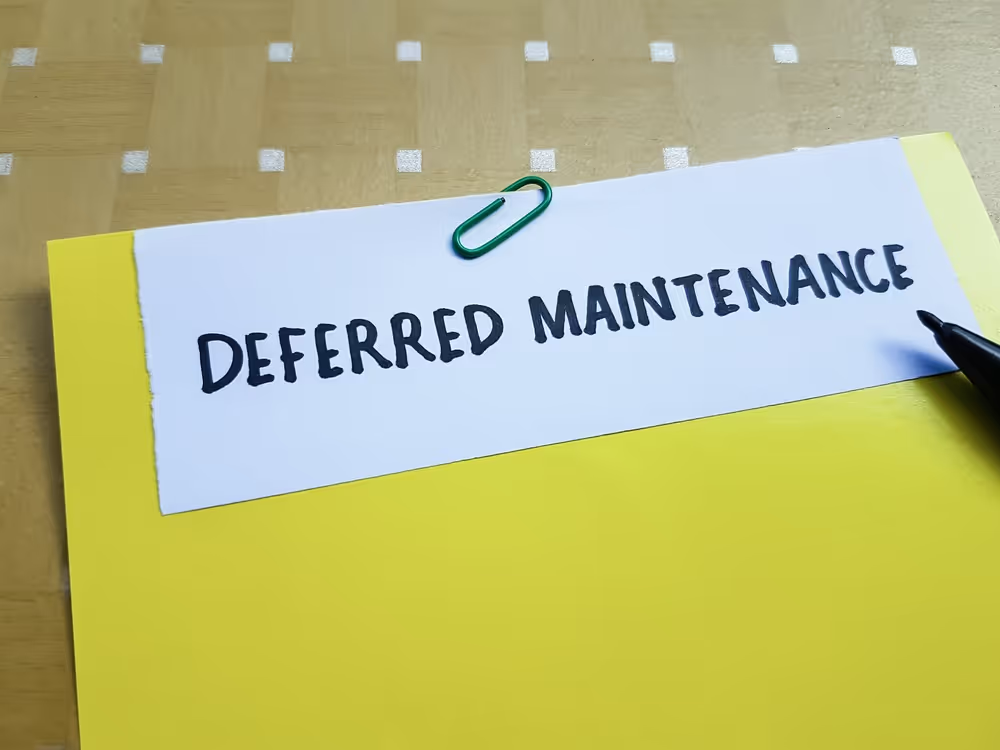
- Deferred maintenance
- Short-term repairs
- Components approaching the end of their expected service life
- Potential capital replacements
- Items requiring additional evaluation
- Conditions that could not be fully assessed
- Information that was unavailable
- Assumptions made during the assessment
If something is unclear, ask the consultant who prepared the report.
The purpose of technical due diligence is not merely to document problems. It is to reduce uncertainty about the property.
10. Identify the Remaining Unknowns Before the Due-Diligence Period Ends
Near the end of the technical review process, make a simple list. “What do we know?” Document the significant physical conditions and anticipated capital needs that have been reasonably established.
What do we still not know?
Examples might include:
- The cause of structural movement
- The condition beneath a roof membrane
- Whether a buried sewer line is deteriorated
- Whether environmental concerns require additional investigation
- Whether proposed renovations will require substantial system upgrades
- Whether undocumented modifications were properly designed or permitted
Which unknowns matter enough to investigate further?
Not every uncertainty warrants another study. But important uncertainties should be identified intentionally rather than discovered accidentally after acquisition.
11. Turn Due Diligence into an Ownership Plan
The usefulness of due diligence should not end when the property changes hands. The information collected during the acquisition can become the beginning of the property's operating history.
A new owner can use it to establish:
- Preventive maintenance schedules
- Roof maintenance programs
- HVAC service schedules
- Capital replacement planning
- Pavement maintenance
- Exterior maintenance
- Fire and life-safety inspection tracking
- Equipment inventories
- Warranty tracking
- Long-term capital budgeting
Instead of beginning ownership with a blank page, the buyer begins with a baseline understanding of the property.
The Goal Is Not to Find a Perfect Building
Almost every commercial property has deficiencies. Older buildings have aging components. Newer buildings can have construction defects. Well-maintained properties still have equipment that eventually requires replacement.
The purpose of commercial due diligence is therefore not to prove that a building is perfect. It is to answer a much more useful question:
Do I understand what I am buying?
A thoughtful due-diligence process helps a buyer identify material physical conditions, recognize significant unknowns, understand potential capital requirements, and determine when additional expertise is warranted. That knowledge makes it possible for the buyer and their transaction professionals to make decisions with better information.
-------------------------------
This article is provided for general educational purposes. Commercial real estate transactions, properties, jurisdictions, and due-diligence requirements vary substantially. It is not legal, brokerage, financial, engineering, architectural, environmental, or code-compliance advice and should not be relied upon as a substitute for advice or services from appropriately qualified specialists. The scope of any property assessment should be established based upon the specific property, intended use, client objectives, and agreed scope of services.