Roof Termination Requirements
Over the years, we've seen inspection comments regarding the termination heights and clearances of chimneys, gas vents, and plumbing vents met with plenty of eye-rolling from real estate professionals and confusion from homebuyers.
This article aims to clear up some of that confusion by explaining what these requirements are, where they come from, and, most importantly, why they matter.
But First, Definitions…
Definitions are based on the 2024 IFGC + UPC as adopted by the State of Montana.
(Chimney): A primarily vertical structure containing one or more flues, for the purpose of carrying gaseous products of combustion and air from an appliance to the outside atmosphere. A chimney can be site-constructed of masonry, metal, or factory-built. Chimneys are capable of conveying exhaust gases from the combustion of solid-fuel (wood, coal), liquid-fuel (oil), or gas-fuel (natural gas, propane) appliances.
(Gas Vent): A pipe or other conduit composed of factory-made components, containing a passageway for conveying combustion products and air to the atmosphere, listed and labeled for use with a specific type or class of appliance. Unlike chimneys, gas vents are used exclusively for the conveyance of gas-fueled appliances (gas furnaces, gas water heaters, gas stoves, etc.) Note: if it serves a solid-fuel appliance, it's a chimney.
(Plumbing Vent): A pipe provided to ventilate a plumbing system, to prevent trap siphonage and backpressure, or to equalize the air pressure within the drainage system. Plumbing vents also convey hazardous sewer/septic gases to the outside atmosphere.
Next, The Rules…
Requirements are based on the 2024 IFGC + UPC as adopted by the State of Montana.
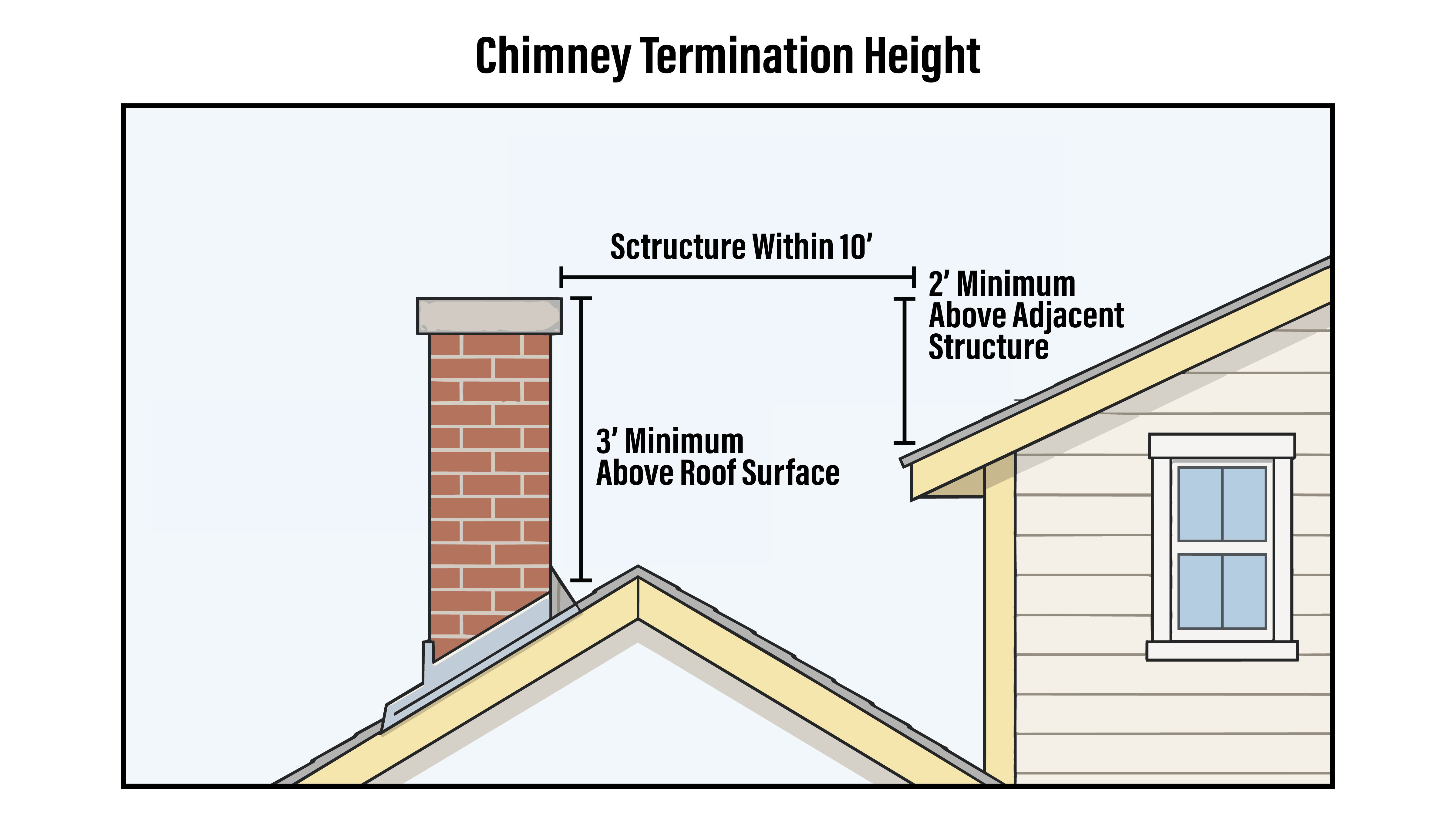
Chimneys: Chimneys for residential-type appliances must extend not less than 3 feet above the highest point where they pass through the roof and not less than 2 feet higher than any portion of a building within a horizontal distance of 10 feet. Inspectors will refer to this requirement as the “3-2-10 rule”.
Why It Matters: Chimneys serve appliances that generate extreme thermal loads and high-temperature combustion byproducts. Because these systems carry higher fire risks and rely heavily on natural thermal draft, building codes mandate rigid vertical and horizontal clearances to prevent roof ignition and backdraft conditions caused by wind turbulence.
----------
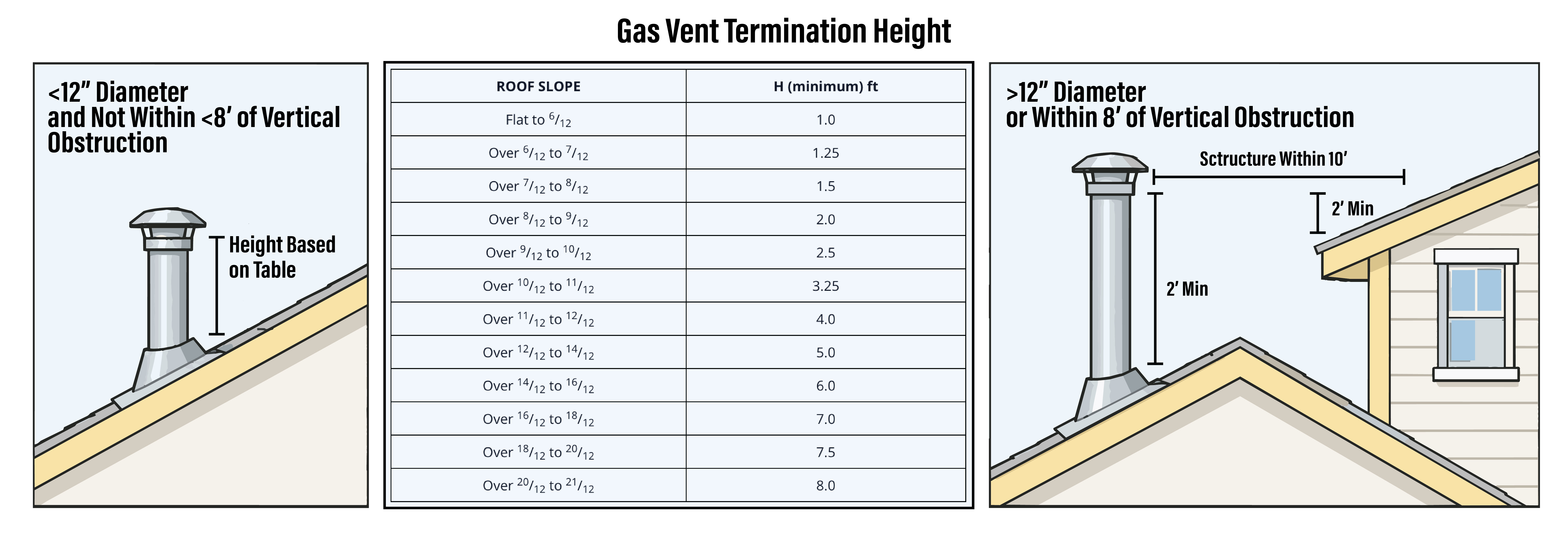
Gas Vents (Scenario #1): Gas vents that are 12 inches or less in size and located not less than 8 feet from a vertical wall or similar obstruction shall terminate above the roof in accordance with the roof slope table below.
Gas Vents (Scenario #2): Gas vents that are over 12 inches in size or are located less than 8 feet from a vertical wall or similar obstruction shall terminate not less than 2 feet above the highest point where they pass through the roof and not less than 2 feet above any portion of a building within 10 feet horizontally. Inspectors may refer to this as the "2-2-10 rule".
Why It Matters: Gas vent terminations must account for roof pitch and proximity to neighboring vertical walls to ensure adequate draft and complete dispersal of flue gases. When wind blows over a roof surface, high-pressure zones and turbulence form based on the roof slope and adjacent obstructions; proper termination height ensures the vent outlets above these eddies to prevent backdrafting.
----------
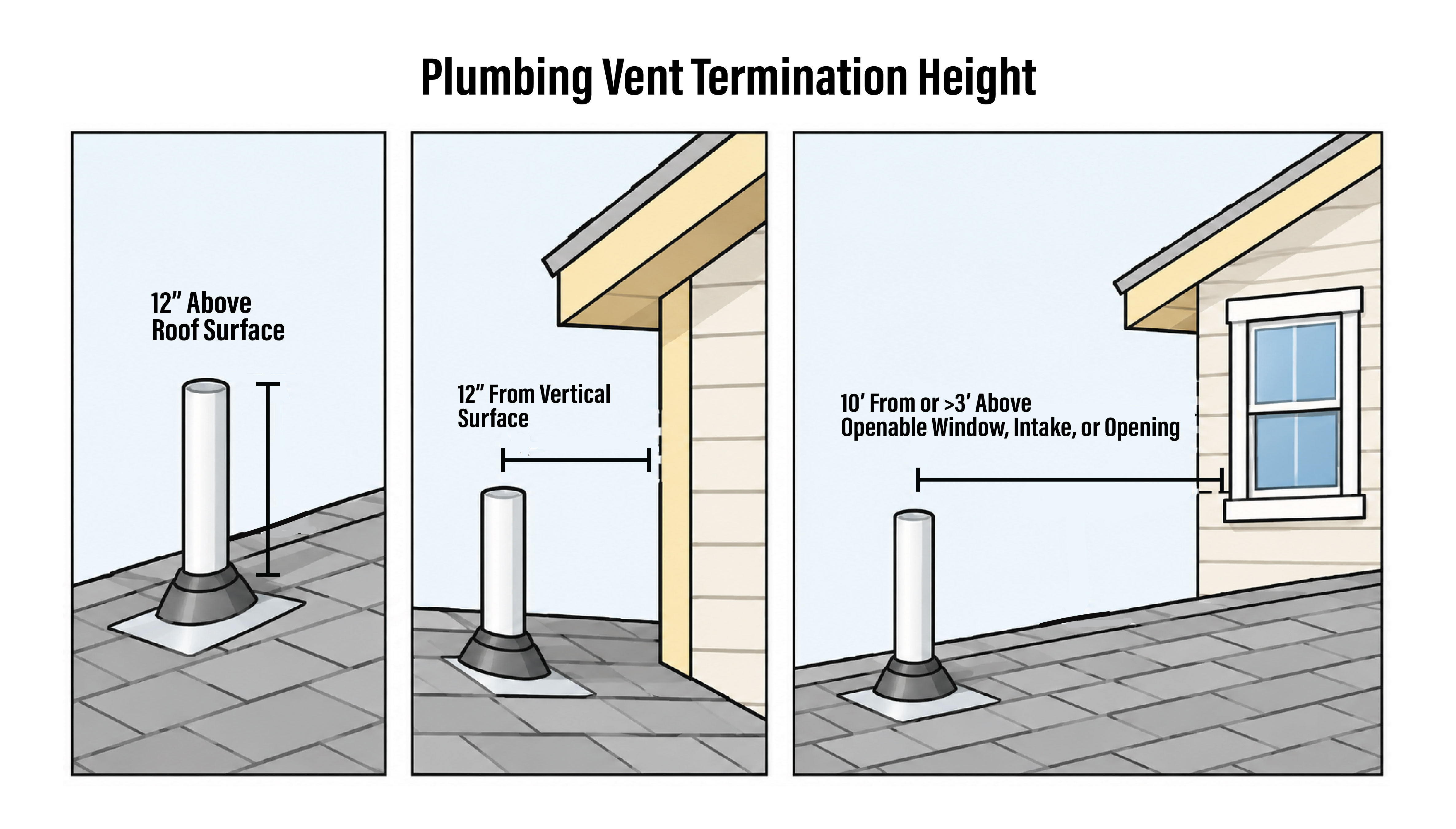
Plumbing Vents: Each plumbing vent pipe or stack shall extend through its flashing and shall terminate vertically not less than 12 inches above the roof nor less than one foot from any vertical surface. Additionally, Each vent shall terminate not less than 10 feet from, or not less than 3 feet above, an openable window, door, opening, air intake, or vent shaft.
Why It Matters: Proper plumbing vent termination height and adequate clearance from outdoor air intakes or operable windows are essential to prevent noxious fumes from re-entering living spaces and degrading indoor air quality.
Finally...
I know, I know. This isn't exactly the most glamorous topic you've ever read about. And frankly, if you're still reading, I'm impressed.
But building safety often comes down to the little, seemingly boring details. And if you're the type of person who's eager to learn and has the patience to appreciate those details, we're going to get along just fine. See you next time.