The Electrified Montana Home
For most homeowners, managing household utility bills while maintaining a comfortable, safe indoor climate feels like a balancing act fraught with conflicting advice. Whether you are contemplating how to replace an aging furnace, looking to cut monthly energy costs, or seeking tangible ways to lower your carbon footprint, the sheer volume of choices, from natural gas and propane to solar panels and heat pumps, can easily trigger decision paralysis.
The reality is that roughly 40% of all U.S. carbon emissions stem directly from decisions made around our kitchen tables: the machines we use to heat our air, warm our water, cook our food, and power our vehicles. Most households rely on equipment that burns fossil fuels directly inside or adjacent to their living spaces. When these machines reach the end of their useful lifespans, homeowners face critical choices that lock in their energy bills and household carbon footprints for the next 10 to 25 years.
Transitioning your home to modern electric appliances is not a passive lifestyle sacrifice or an incremental green choice, it is a comprehensive, high-performance infrastructure upgrade. Replacing outdated, combustion-based machines with efficient electric equivalents delivers superior machine performance, improved indoor air quality, lower long-term operating costs, and unprecedented energy efficiency.
1: Heat Pumps Don't Create Heat, They PUMP It (Achieving 300%–450% Efficiency)
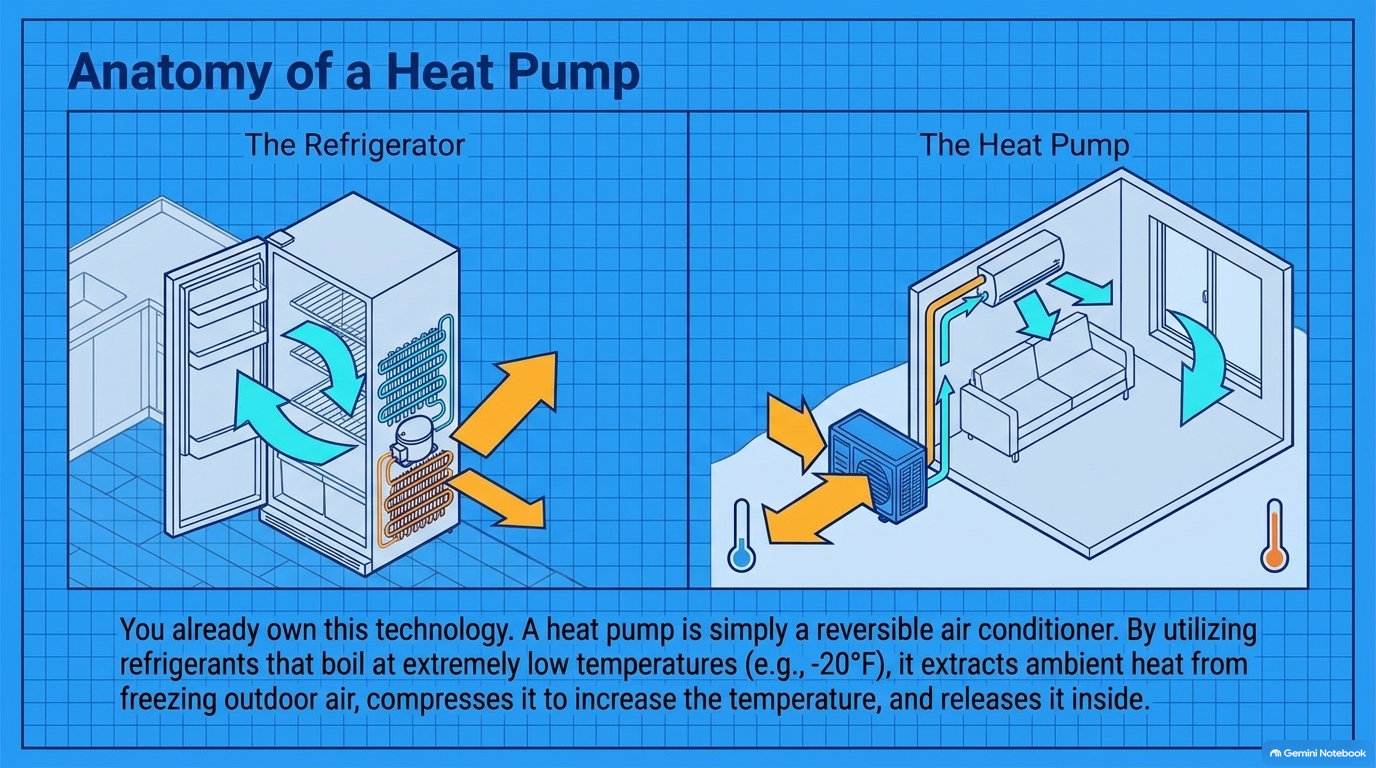
To understand why electric space heating is modernizing residential energy, it helps to examine how a standard kitchen refrigerator operates. A refrigerator does not generate coldness; instead, it uses a closed loop of refrigerant to absorb heat from inside the cabinet and dump it into your kitchen. An air-source heat pump operates on the exact same thermodynamic principle, but in reverse. Even cold outdoor air contains significant thermal energy. The heat pump absorbs this ambient heat outdoors, compresses it, and transfers it directly inside your living space.
This thermodynamic process creates a massive gap in energy efficiency when compared to legacy heating systems:
- Natural Gas Furnaces: Burn fossil fuels directly, delivering roughly 80% thermal efficiency because a significant portion of energy is lost through exhaust venting and combustion byproducts.
- Electric Resistance Heaters: Convert electrical current directly into thermal energy via resistive coils, achieving 100% efficiency (1 kWh of electricity yields 1 kWh of heat).
- Air-Source Heat Pumps: Because they move existing ambient thermal energy rather than creating it from scratch, modern heat pumps achieve 300% to 450% efficiency (1 kWh of electrical input yields 3 to 4.5 kWh worth of indoor heat output).
This foundational physics advantage transforms the heat pump from a mere alternative heater into a dominant technological upgrade. By delivering three to four times more heat energy than the electrical energy consumed, heat pumps fundamentally alter household energy math.
2: Electric Heating is Rapidly Conquering Cold-Climate Frontiers
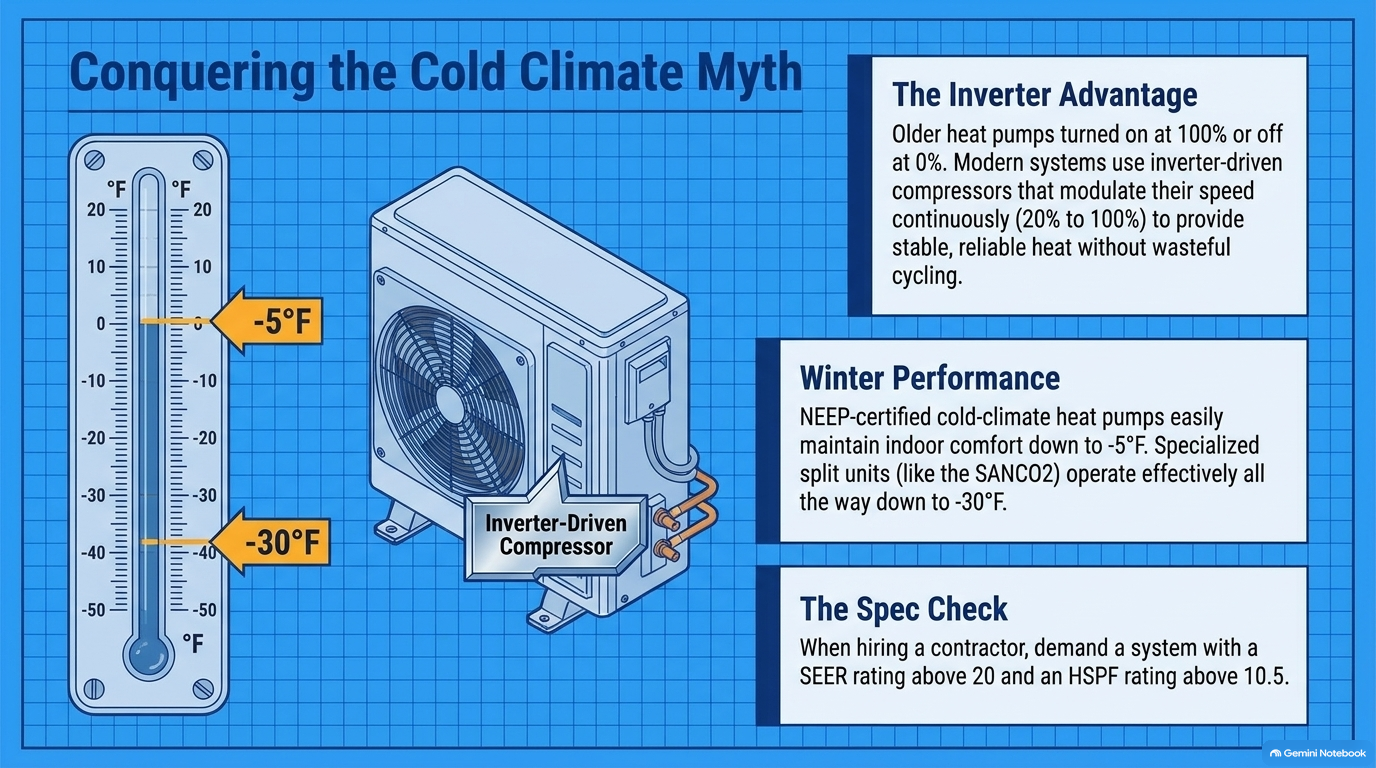
A persistent myth surrounding electric heating is that heat pumps fail when outdoor temperatures plunge below freezing. Field data and real-world adoption metrics prove that electric space heating is expanding rapidly across cold-climate regions.
According to a Montana Free Press analysis of U.S. Census Bureau data in cold-climate states like Montana:
- Occupied Home Adoption: The share of occupied Montana homes heated primarily with electricity grew from 16% (58,000 homes) in 2000 to nearly 27% (130,000 homes) in 2025.
- Growth Share Dynamics: Over the same 25-year period, natural gas-heated homes also grew in absolute numbers (from 257,000 to 310,000 homes) as total occupied residences expanded from 359,000 to 481,000. However, natural gas saw its overall heating market share fall from 72% down to 64% precisely because electric heating captured a disproportionately larger share of new home growth.
- New Construction Surge: A study by the Northwest Energy Efficiency Alliance found that electric heating systems in new single-family construction surged from 2% in 2012 to 13.5% in 2025, with cold-climate heat pumps representing the vast majority of those new systems.
Technological advancements have dismantled cold-weather performance barriers. Inverter-driven, variable-speed compressors allow standard cold-climate heat pumps to maintain efficient heating performance down to -5°F or lower. Specialized split-system units utilizing alternative refrigerants, such as CO₂-based systems like the SANCO2, have been rigorously field-tested to operate effectively down to extreme conditions of -30°F, as demonstrated in harsh winter environments like Grand Forks, North Dakota.
3: Induction Cooking Outperforms Gas in Speed, Safety, and Health
For decades, natural gas stoves were marketed as the professional chef's standard. However, culinary perception and residential standards are shifting rapidly toward induction technology, which represents a fundamental performance leap over methane combustion.
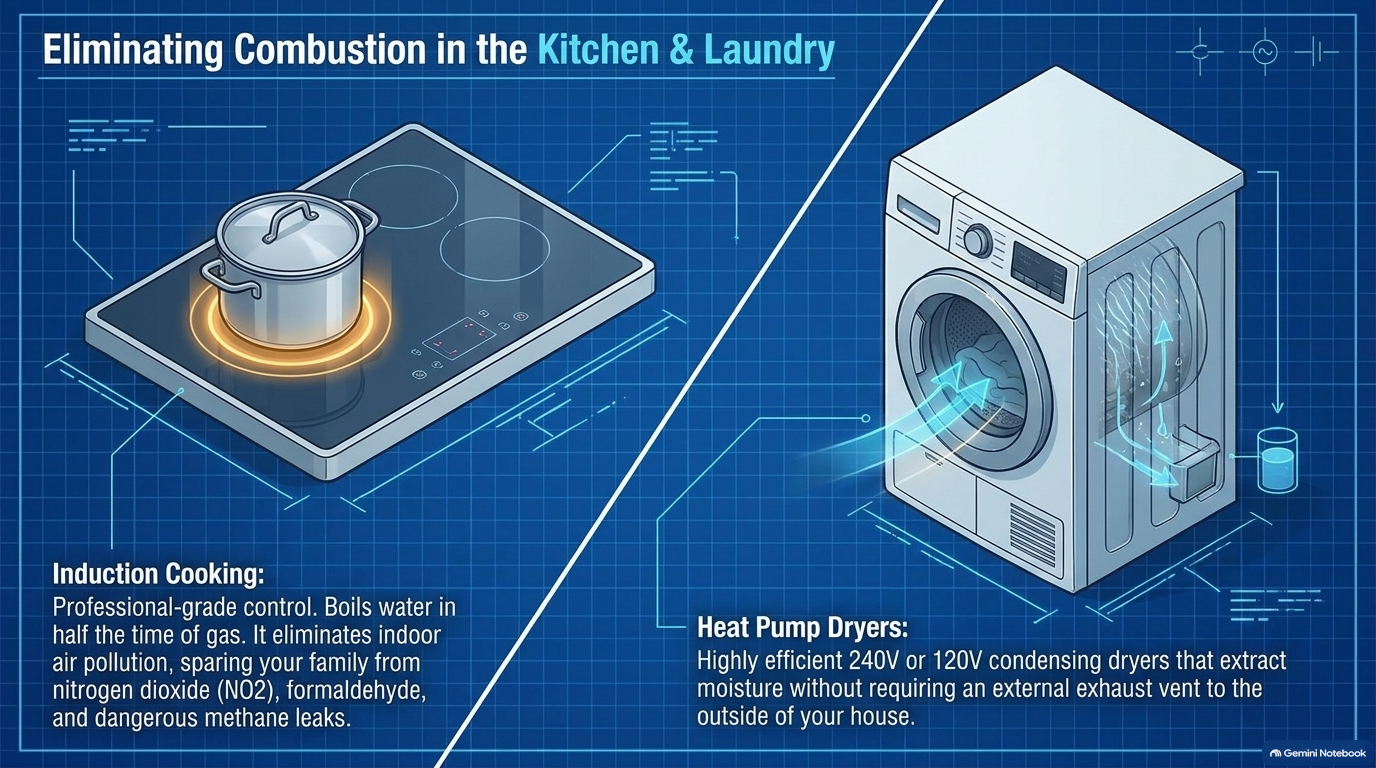
Induction cooktops use high-frequency magnetic coils located beneath the smooth glass surface to generate an electromagnetic field that excites iron molecules directly within cookware. Because thermal energy is generated directly inside the pan rather than radiant heat bleeding into the room, induction offers distinct operational advantages:
- Rapid Speed and Precision: Induction boils water in roughly half the time of a standard gas burner while offering immediate thermal response and low-temperature control that methane flame burners cannot match.
- Elimination of Indoor Pollution: Burning methane gas indoors releases harmful byproducts like nitrogen dioxide and fine particulate matter into kitchen spaces. Transitioning to induction eliminates unvented fossil-fuel combustion inside the home, dramatically protecting indoor air quality.
- Enhanced Safety and Cool Surfaces: Because heat transfer occurs via magnetic excitation, the cooktop surface surrounding the vessel stays relatively cool, eliminating open flames and mitigating accidental burn risks or gas leak hazards.
Practical Utility Tip: Unsure if your existing pots and pans will work on an induction cooktop? Perform a quick magnet test. Simply grab a standard refrigerator magnet and hold it to the bottom of your cookware. If the magnet firmly sticks to the base, the vessel has sufficient ferrous content and is 100% ready for induction cooking.
4: You Don't Necessarily Need an Expensive Panel Upgrade to Start Electrifying
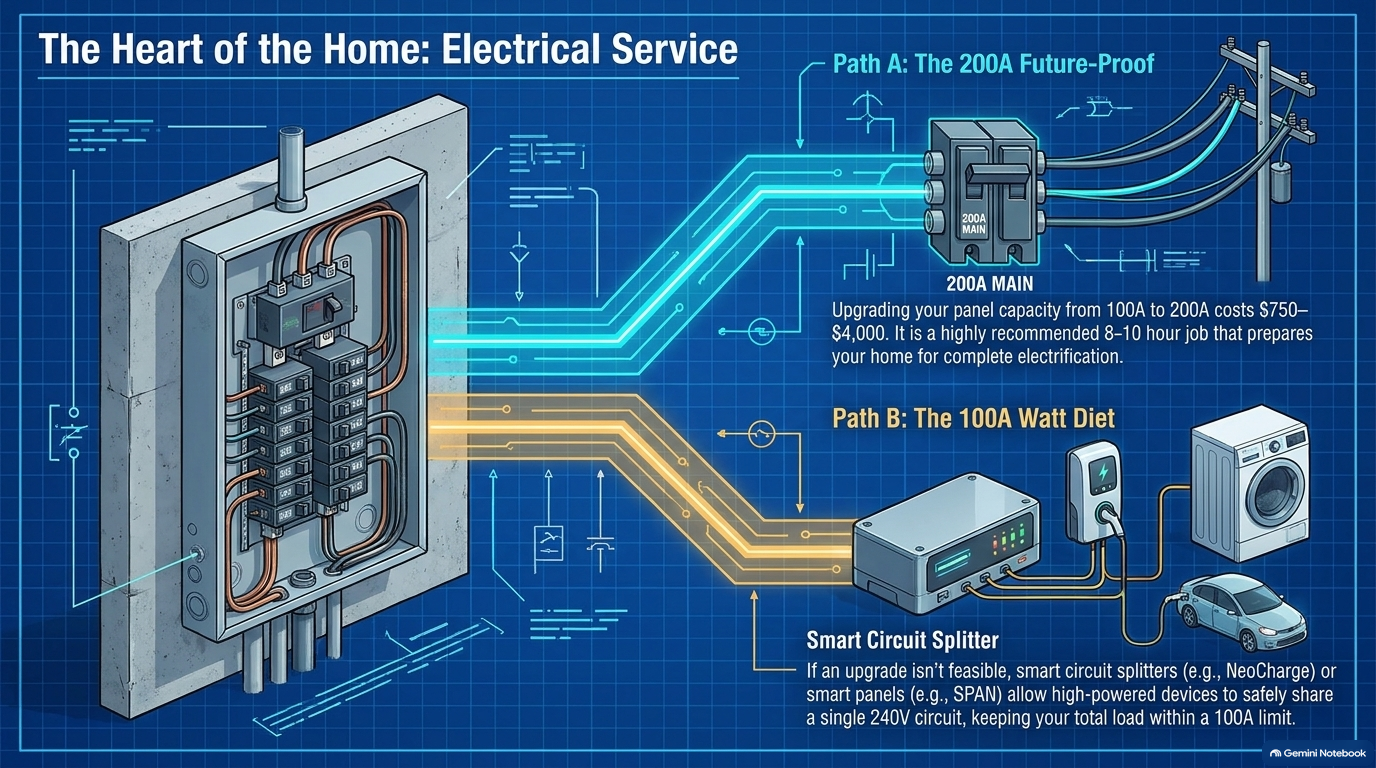
Many homeowners hesitate to begin their home decarbonization journey due to fears of an immediate, costly main electrical panel upgrade. Upgrading an older 60A or 100A panel to a 200A service can cost between $750 and $4,000 and require coordination with local utilities. Fortunately, smart load management and strategic equipment selection allow most homes to electrify extensive equipment within existing 100A limits.
Smart Load-Management & Circuit Solutions
- The "Watt Diet": Choosing right-sized, high-efficiency equipment, such as 120V or 240V / 15A heat pump water heaters over high-draw 30A traditional resistance units, drastically lowers peak amperage requirements without sacrificing performance.
- Smart Circuit Splitters: Devices like the NeoCharge Smart Splitter (costing around $500) safely plug into an existing 240V outlet, allowing two heavy-draw appliances (such as a Level 2 EV charger and an electric clothes dryer) to share a single circuit. The splitter automatically toggles power based on demand, keeping household demand under 100A thresholds without a main service replacement.
- Smart Energy Management Systems: Homeowners seeking complete digital control can install app-connected, computer-controlled breaker panels such as the SPAN Smart Electrical Panel ($3,500 plus installation). These systems allow real-time load monitoring, dynamic circuit shedding, and seamless integration with rooftop solar and home battery storage.
Pre-Wiring Specs for Future-Proofing
Installing dedicated circuits during routine electrician visits prevents emergency panic-buying of fossil-fueled replacements when an old machine breaks down. Pre-wiring dedicated outlets typically costs 250–750 per run (taking 2 to 3 hours). Having the following specifications wired to key locations ensures your home is ready for instant plug-and-play electric upgrades:
- Heat Pump Water Heater: Dedicated 240V / 15A–30A circuit (or plan for a 120V plug-in retrofit unit).
- Induction Range / Cooktop: Dedicated 240V / 40A–50A circuit and outlet.
- Heat Pump / Condensing Clothes Dryer: Dedicated 240V / 20A–30A circuit and outlet.
- Level 2 EV Charger: Dedicated 240V / 20A–40A circuit.
5: Heat Pump Water Heaters Are Stealth "Thermal Batteries" Cutting 10% of Home Emissions
Domestic hot water heating accounts for approximately 10% of total household carbon emissions. Replacing a traditional gas or electric-resistance tank with a Heat Pump Water Heater (HPWH) provides one of the highest financial and environmental returns of any home infrastructure decision.
Space Requirements & Dehumidification
HPWHs operate by pulling low-grade heat from surrounding ambient air and concentrating it into stored water. To function efficiently, integrated HPWH units require an unconditioned room volume of at least 10' x 9' x 8' (approx. 720 cubic feet) that remains above 45°F year-round, making basements and garages ideal locations. As a secondary operational benefit, the heat pump naturally cools and dehumidifies ambient air, turning damp basements into dry, comfortable storage spaces.
Thermal Storage, Economics, and Rebates
- Thermal Energy Storage: HPWHs function as thermal batteries, holding clean energy in the form of heated water. By opting for a larger 80-gallon tank paired with a thermostatic mixing valve, homeowners can heat water to 140°F during low-cost utility hours and safely blend it down to 105°F at the tap. This expands usable hot water reserves while shifting electrical load away from peak utility rate periods.
- Financial Impact & Rebates: Compared to legacy gas or electric-resistance water heaters, HPWHs save typical households hundreds of dollars annually in operating costs. Furthermore, utility incentives and regional energy rebates ranging from $300 to $1,500 frequently offset a massive portion, or even the entire purchase price, of the unit.
Upgrading Your Personal Infrastructure for the Future
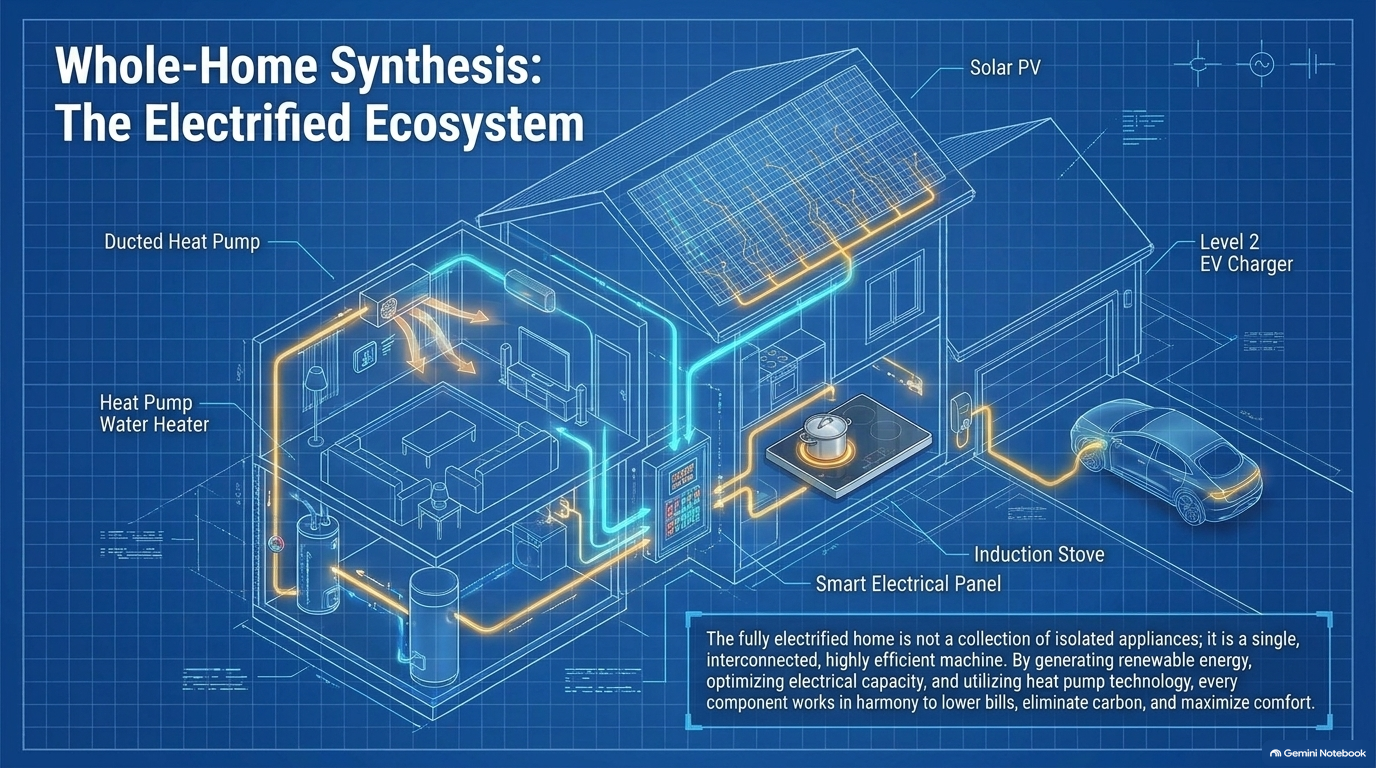
Electrifying your residence is not about adopting restrictive lifestyle sacrifices or enduring lower comfort; it is about making a series of informed, one-time infrastructure choices. Swapping out failing combustion furnaces, gas water heaters, and leaky methane stoves for high-performance electric alternatives equips your home with quieter, safer, and inherently more efficient technology.
Crucially, electric appliances serve as "appreciating climate assets." Even if your local utility grid currently relies in part on fossil-fueled generation, modern electric equipment is so thermodynamically efficient that it immediately reduces household operational carbon emissions. As electric utilities continue transitioning toward solar, wind, and storage options, your home's environmental footprint will automatically grow cleaner over time without requiring any further action on your part.