Cool Your Home Naturally
1. Introduction: The "Cooker" Conundrum
Every summer, we encounter those inevitable "cookers"—days when the atmosphere becomes oppressive and your home begins to feel more like an oven than a sanctuary. Most homeowners respond by immediately cranking up the central air conditioning or installing window units, a move that is as expensive as it is energy-intensive. As property consultants, we see this as a fundamental misunderstanding of how a building operates. You aren't just fighting the weather; you are fighting physics. By optimizing your home’s thermal envelope and working with natural convection rather than against it, you can achieve a sophisticated "zero-energy chill" using low-cost, professional-grade strategies.
2. Insulation Isn't Just for Winter
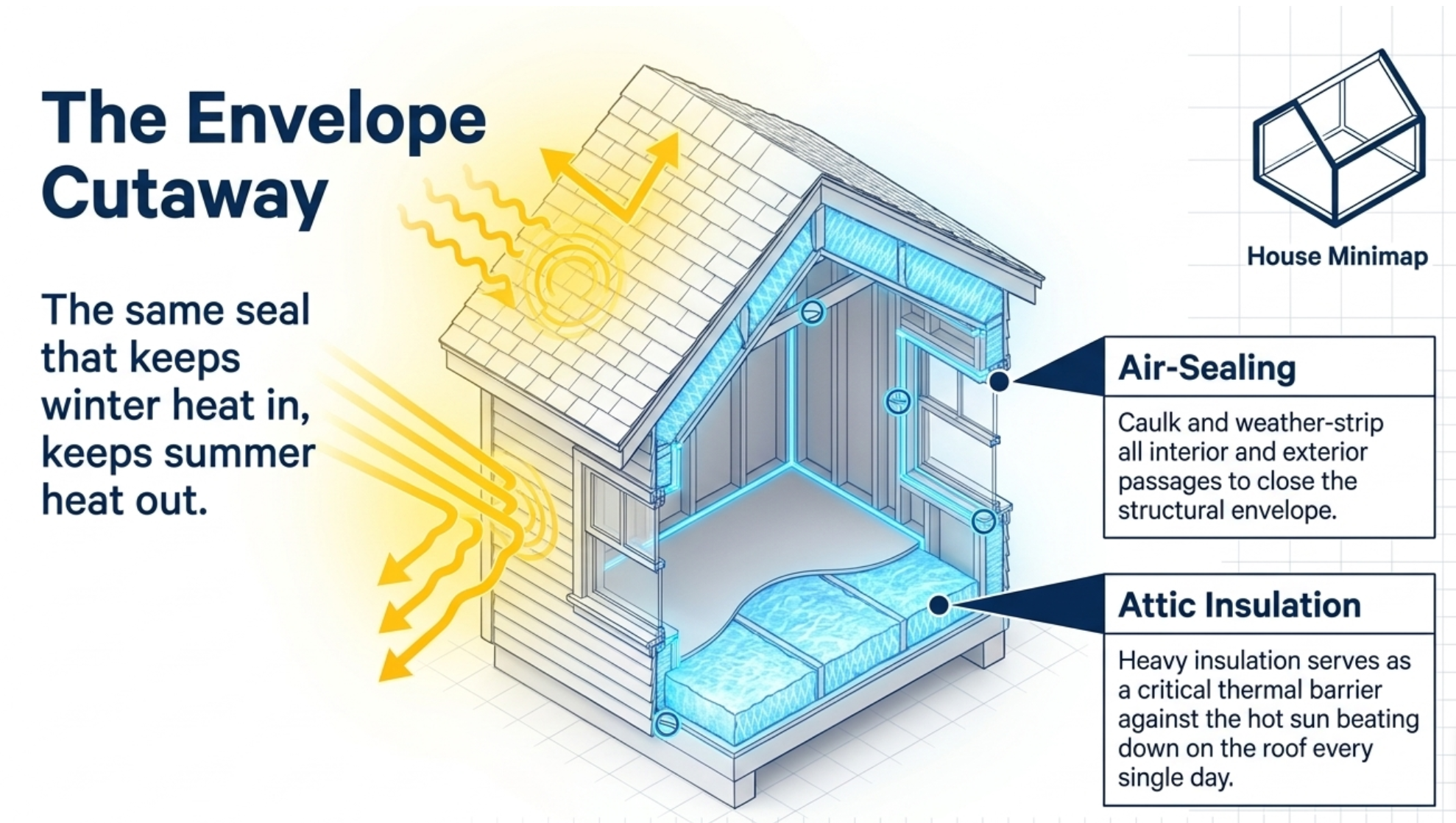
One of the most common misconceptions in the industry is that building weatherization is a winter-only endeavor. In reality, a robust thermal barrier is your first line of defense against heat gain mitigation. The physics of heat transfer are indifferent to the season; the same principles that trap warmth during a blizzard are what prevent the "cooker" temperatures from migrating into your living space in July.
The same weatherization methods that keep heat in during winter keep it out during summer.
Effective air-sealing—specifically caulking and weather-stripping—is essential. However, attic insulation provides the strong protection required to combat the solar radiation beating down on your roof. By fortifying this barrier, you ensure that the heat collected by your shingles doesn't radiate downward into your bedrooms.
3. The Physics of the Cross-Breeze
Strategic ventilation is about mastering airflow patterns. In arid or temperate climates, the goal is to leverage the cool diurnal shifts of early mornings and late evenings. To maximize this, you must create a pressure differential by opening windows at the highest and lowest points of the structure—for instance, a main-floor door and an upstairs window—to trigger a chimney effect.
This concept is perfectly illustrated in the architectural design of a well-ventilated roof. This type of system relies on a natural convection current with cool air entering through the eave vents at the base of the roofline. This air then travels upward through the attic space, picking up heat before exiting through the ridge vent located at the very peak of the roof.
Timing is critical: you must close up the home the moment the morning coolness evaporates. For an extra boost, a whole-house fan mounted in the attic can be used to aggressively pull warm air out through ceiling vents and exhaust it through the roof.
4. Shading: It’s All About Reflection
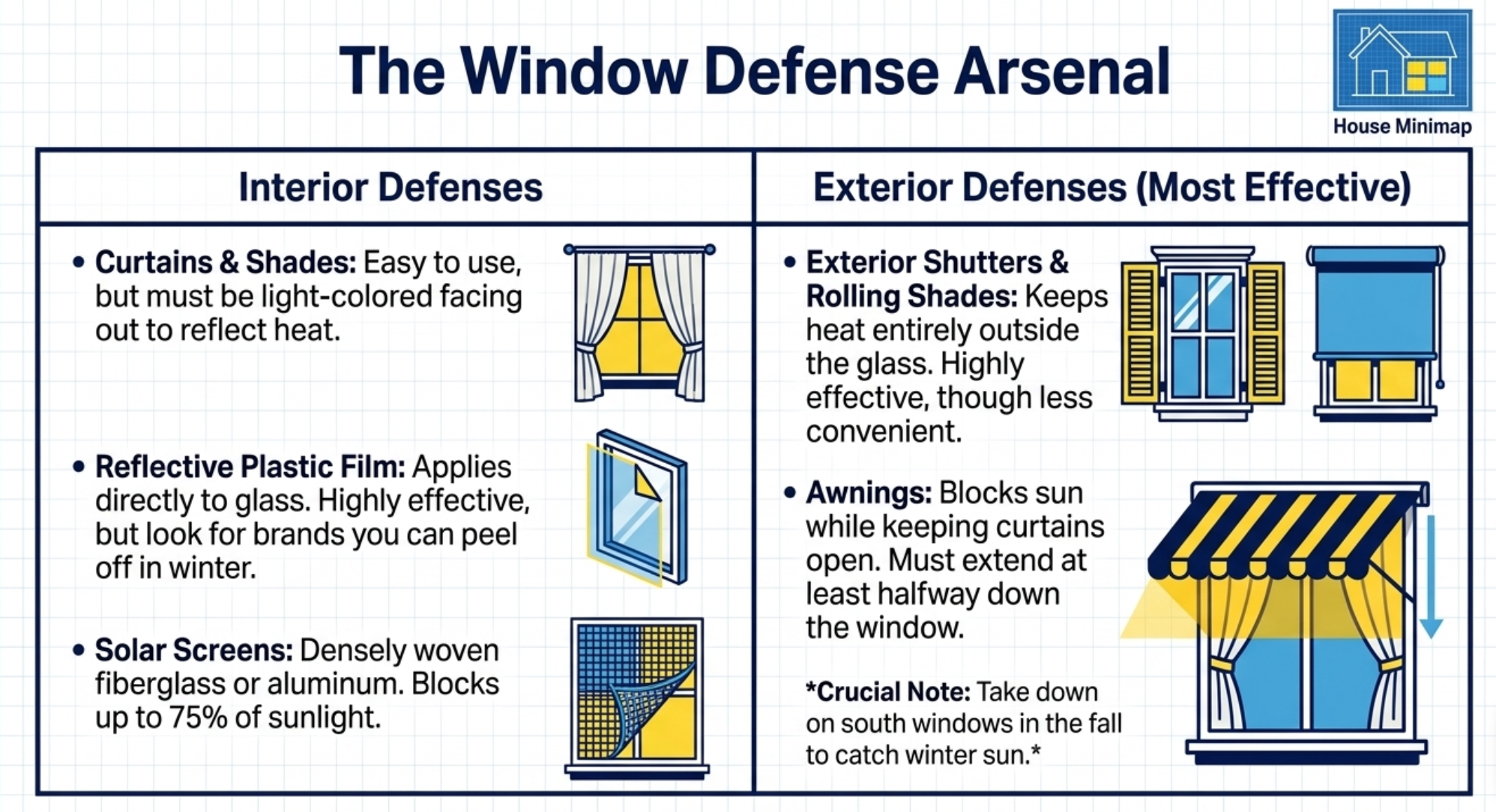
Direct solar gain through glass is the fastest way to compromise your home’s temperature. To prevent this, you must implement a strict shading schedule: start in the morning by pulling east-side curtains or shades, then transition to shading south and west-facing windows as the sun tracks across the sky.
For interior treatments, prioritize light colors facing outside, as these reflect solar energy rather than absorbing it. However, the most effective professional solutions are exterior:
- Awnings: Whether purchased or DIY-made from canvas or nylon, these should extend at least halfway down the window on three sides to be effective.
- Solar Screens: These fiberglass or aluminum mesh screens can block up to 75% of sunlight before it even hits the glass.
- Reflective Films: These can be applied directly to the glass; some variants are even removable, allowing you to peel them off for the winter.
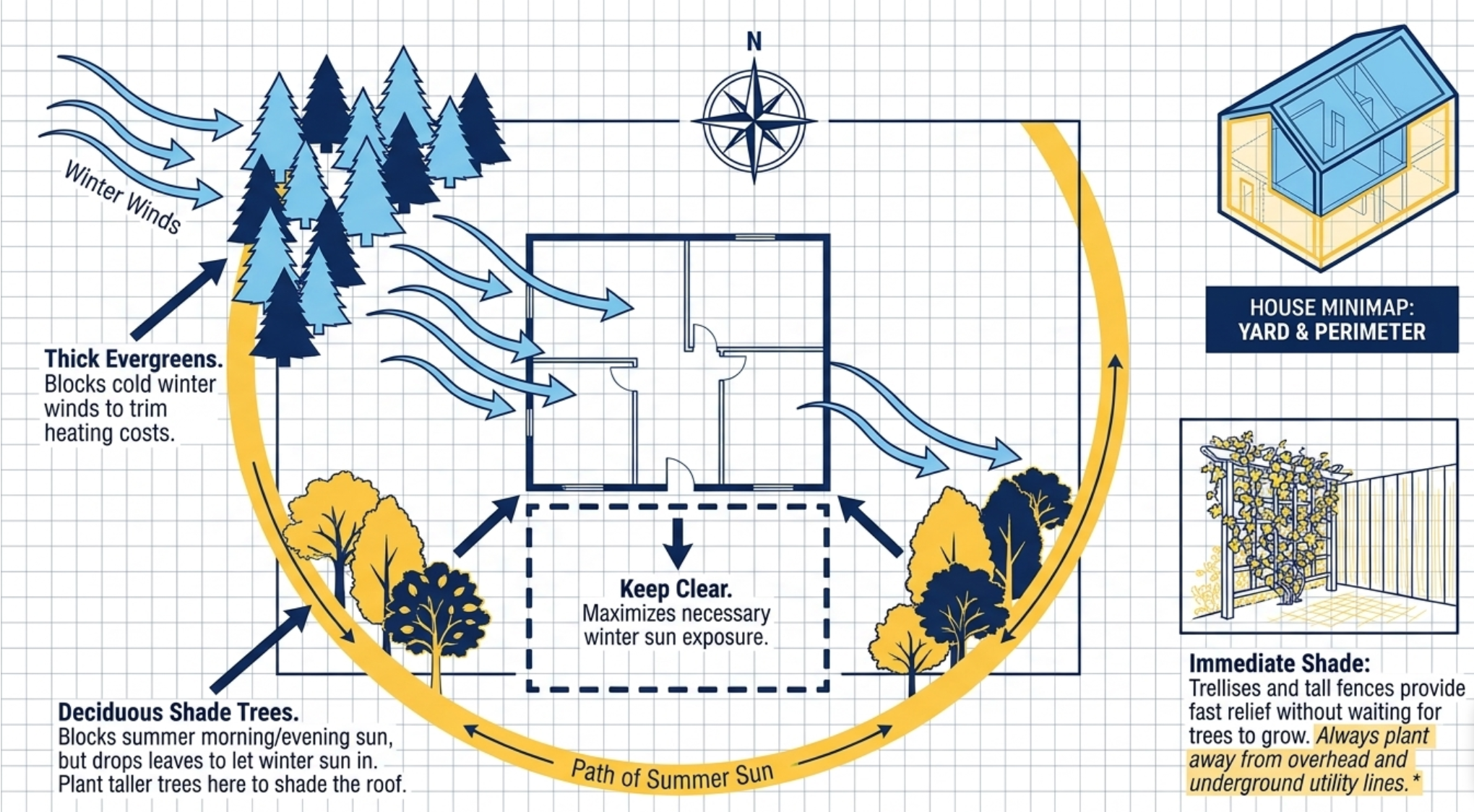
- Trellises: Adding vine-covered trellises provides not only window shading but also cool, sheltered spots for outdoor lounging.
5. Your Kitchen is a Heat Generator
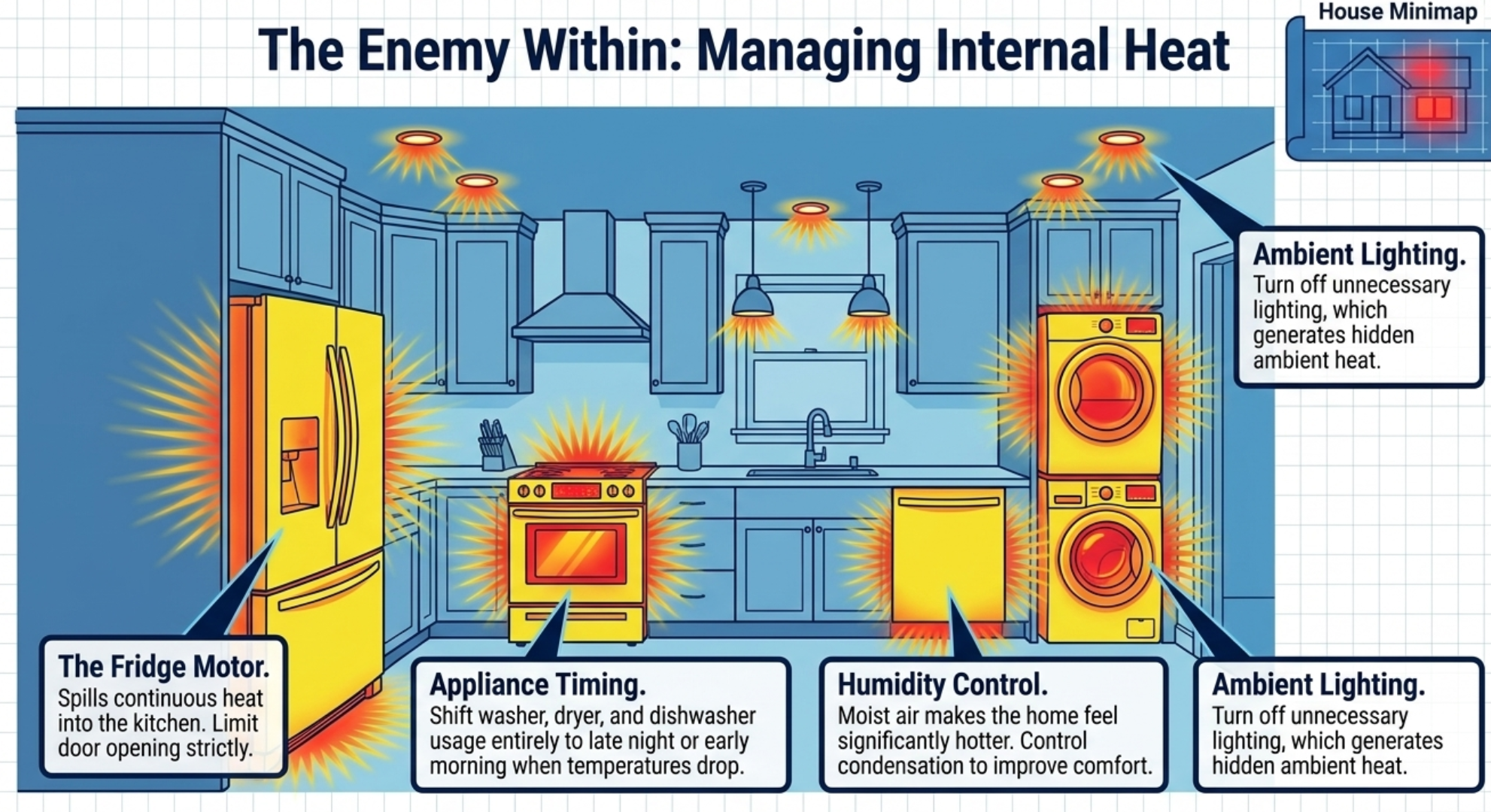
Look at more than just the walls; consider the internal heat load. Your home's major appliances are essentially space heaters. A refrigerator motor, for example, spills heat into the kitchen constantly. To mitigate this, keep the doors closed as much as possible.
Shift your lifestyle to reduce internal gains:
- Move the Kitchen Outdoors: Utilize a barbecue to keep oven and burner heat outside.
- Tactical Laundry: Run washers, dryers, and dishwashers exclusively at night or in the early morning.
- Lighting and Humidity: Use lights sparingly to avoid heat emission and keep humidity levels low, as moist air feels significantly hotter.
- Personal Efficiency: Wear loose-fitting, lightweight clothing to assist your body’s natural cooling mechanisms.
6. Landscaping as a "Living" Air Conditioner
Strategic landscaping is the ultimate passive cooling system. The goal is to utilize deciduous trees—those that shed leaves—to create a seasonal shade plan. Plant small- to medium-height deciduous trees near east- and west-facing walls to block the intense morning and evening sun. But not too close to create negative impacts on the homes foundation or exterior finishes.
However, you must respect the Southern Exposure Paradox. While you can plant taller deciduous trees in the southwest and southeast corners to shade the roof, you must keep the true south side of the house clear. This ensures you don't block the essential solar gain needed for warmth in the winter. This same logic applies to your awnings: while they are vital in summer, you must remember to take them down on south windows in the fall to allow the winter sun to heat your home naturally.
7. Conclusion: A Cooler Future
True home comfort isn't bought at the thermostat; it is engineered through smart choices. By integrating weatherization, strategic landscaping, and reflective shading, you transform your home from a box that fights the elements into a sophisticated thermal system. The next time a "cooker" day arrives, ask yourself: Is your home working for you, or are you working for your utility company?
.png)